gencap
Gender and Climate Adaptation Policy
Making climate and development policies more gender responsive
Home > Policy & Practices
12 Jun, 2013
Shanti Devi, Village: Aditah, Uttarakhand
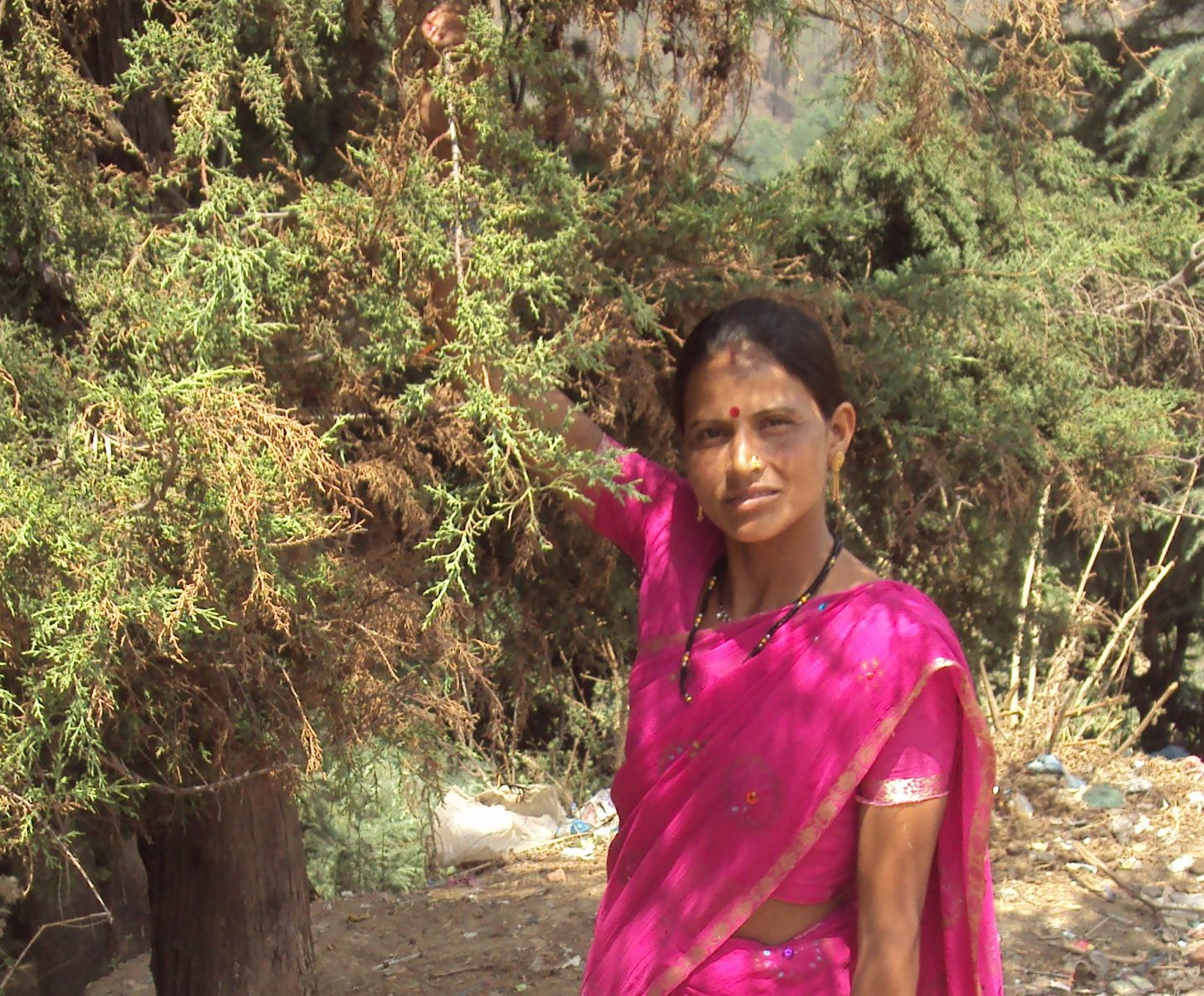 “The burden of troubles at home as well as on the field falls on the shoulder of women, in order to address these challenges we women need to be empowered as informed decision-makers through awareness and training women for record keeping and maintaining accounts. Government or institutions like CHEA should take up initiatives such as constructing more mangers at the block level, promoting horticulture mobile teams, constructing more biogas plants like UREDA Biogas plant, providing resources and support for roof rain water harvesting to address the issue of water shortage.”
09 Mar, 2014
Rainwater harvesting and water management reduces drudgery
Uttarakhand: Abode of all rivers, the hilly regions of Uttarakhand are nevertheless beset by water scarcity. Villagers in districts Almora and Nainital are taking up roof rainwater harvesting with the help of a local organisation. Climate change, with erratic rainfall, higher temperatures, delayed snowfall and early drying of ponds, has further aggravated the problem. Rainwater harvesting has helped conserve water during monsoons for later use and also controlled soil erosion.
West Bengal: The Chhotonagpur range in the western region of West Bengal gets rain only for 2 months and faces drought the rest of the year. The soil on this undulated topography is rocky lateritic with very low water retention capacity. Excavation of ponds is difficult and expensive because the rocks are almost impenetrable. So the ponds are usually very shallow and, after the monsoons, cannot hold water till next summer. Wells also dry up in summer. Women have to spend 5 hours walking 5 Km daily to get water for their daily needs.
10 Jun, 2013
Yoshoda Devi, District: Murzaffarpur, Bihar
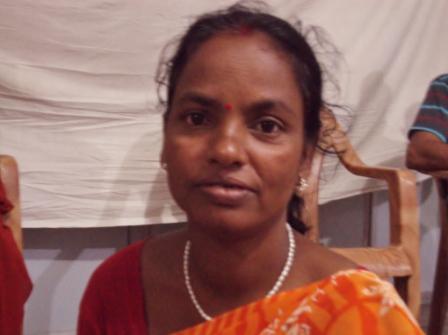 “Most schemes or programmes that the government implements through the panchayat goes to those farmers who have land holding. Farmers having less or no access to land do not have the opportunity to benefit and make use of these schemes. Women here niether own land in their names nor have any access to schemes”.
10 Jun, 2014
Mewa Bibi, Village: Darretha, District: Tikamgarh, Madhya Pradesh
“In this pond, men share our work. But roasting fish and sorting it before sending them to the market is solely done by us women. At the market, we often sell our fish at better prices than men because we have sorted and graded the fish and we know their value better; and because we often negotiate harder with our customers. So we manage to save some money. But men get lower prices and then often just drink their earnings away!”
11 Jun, 2014
Climate-resilient seeds and women's traditional knowledge
West Bengal: Farmers have gone back to growing local traditional paddy varieties, in contrast to high-yielding varieties available in government shops, in North and South 24 Paraganas districts. This has reduced input cost of farmers and led to higher yields in the saline floodwaters in these coastal districts.
Uttar Pradesh: In the eastern districts of Gorakhpur, climate change impacts have delayed rains, which now often come when the paddy is ripe for harvesting or has just been harvested in September-October. To adapt to this, Gorakhpur Environmental Action Group (GEAG) has been propagating Saatha, a traditional variety of paddy that matures early, or in 60 days (the number 60 is called ‘saath’ in Hindi).
11 Jun, 2014
Grain banks contribute to women's empowerment
Madhya Pradesh: The Madhya Pradesh Rural Livelihoods Project (MPRLP) is being implemented in nine districts of the State. Grain banks are one such initiative that is helping small and marginal farmers at the time of drought and crop failure.
Uttar Pradesh, West Bengal: Grain bank is based on the traditional concept of keeping aside a little grain everyday for use in times of distress. Grain banks are being promoted in the flood-prone regions of Gorakhpur district in Uttar Pradesh and in the Sunderbans in West Bengal.
16 Jun, 2014
Organic Agriculture is resilient but more labourious
Madhya Pradesh: The State is unique in having a well-defined organic farming policy which is being implemented through the government’s agricultural extension network including the local centres called Krishi Vigyan Kendras (KVKs).
Uttarakhand: The government’s National Bank for Agriculture and Rural Development (NABARD) is promoting organic agriculture in various ways.
Organic agriculture is also promoted by grassroots organizations in Gorakhpur, Eastern Uttar Pradesh and in the Sunderbans in West Bengal as part of integrated agriculture
16 Jun, 2014
Regeneration of Van Panchayats saves time and brings income
In the hill state of Uttarakhand, women have taken the lead in many places to save degraded forests around their villages because they depend on them for food, fodder and firewood. One such experiment in districts Almora and Nainital has led to the plantation of six to eight tree and shrub species in 15 villages. This initiative is by village Van Panchayats (van means forest in Hindi), a government scheme bringing together forest department officers and villagers to jointly manage village forests.
16 Jun, 2014
Better livestock management in hills helps women farmers
Women farmers, including landless women, rear livestock for food and income security. Livestock is an asset they often own, manage and control. Yet, getting fodder and water has always been difficult for hill women. Human-induced and climate change-led destruction of forests, soil erosion, depletion of perennial streams and erratic rainfall has made the situation worse. In the hills, livestock is particularly important because landholdings are small, fragmented and decreasing and women are the main farm workers. Livestock is a critical additional source of livelihood for farmer families.
16 Jun, 2014
Integrated Farming promotes traditional knowledge and climate resilience
Uttar Pradesh & West Bengal: An overwhelming 85% Indian farmers are small (1-2 ha of land) and marginal (less than 1 ha of land) and increasingly women. For these farmers, industrial mono-cropping with its high inputs and accessing large-scale government loans or schemes is not viable. What works for these small and marginal farmers is integrated farming, carried out in different geographical regions in different ways. With the increase in natural disasters, innovative use of these small lands and crop production has helped tide farmers through emergency times. In West Bengal, one such innovative method is called land shaping and in eastern Uttar Pradesh it’s called ‘machaan’ or multi-level cropping.
Alternative Futures
© 2013, All Rights Reserved


